#20 The Infinite Marathon Problem
Kolkata - 19th October 2024
Imagine being offered anything you desire in life—money, fame, legacy—with one condition: the longer you can walk or run, the greater the rewards you receive. There are no time, distance, or route limits; you are free to go as far as you wish on any route you desire, and the rewards increase exponentially with the distance covered. What strategy would you choose?
You might consider running as fast as you can until you can no longer continue. Suppose you aim for the rewards at the 100 km mark. If you push yourself to run 20 km a day, you could reach your goal in five days. However, overexerting yourself might mean you can't maintain this pace, or worse, you could suffer an injury.
Alternatively, you might decide to walk just 10 meters each day. While this is something you can do consistently without fail, it would take 100 days to reach just 1 km. To cover 100 km, you'd need 10,000 days—approximately 27.4 years.
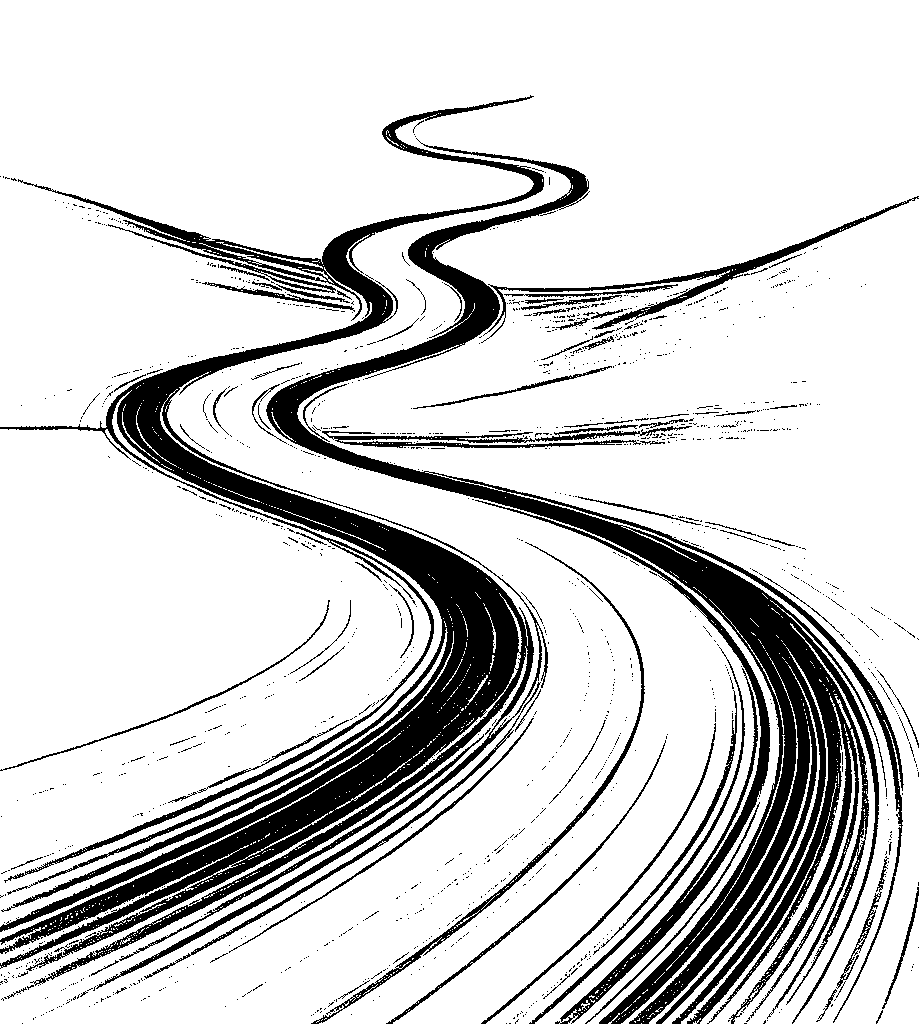
The key lies in finding a pace and intensity that you can consistently maintain over an indefinite period. You also need to choose a path compelling enough to keep you focused, allowing you to reap the exponential benefits that lie in the future. Pacing, like other aspects of the race is also deeply personal, and the ideal pacing is something that one needs to find for oneself. Variable pacing is more human, as our circumstances keep changing and our ability (and hence speed) to traverse the path increases with more experience on the path or decreases with time away from the path.
This scenario mirrors the fundamental challenge of life. There is no universally accepted purpose; any sense of purpose is deeply personal. This freedom means there is no prescribed path you must follow, no minimum or maximum distance you are required to cover. You are completely free to choose your path and set your target distance. While there's no time limit on the race, your lifespan imposes a natural limit.
Most of the benefits of any path lie in the distant future, where all the compounded rewards accumulate. To enjoy these benefits, you must arrive at that point with as healthy a body and mind as possible; otherwise, you may not be able to enjoy the rewards offered to you.
The further you progress along a given path, the more opportunities open up in your life. Each journey also transforms you; the longer you stay on the path, the more your body and mind align with it. You will not be the same person at your 1st km as you are at your 1,000th km.
If you're unsure whether a route is suitable for you, just start walking on whatever path seems favorable right now. Even if it's not the exact route you want to follow, any path you choose will lead to more paths in the future in the direction of your movement. It is unlikely you will stumble upon a favourable path without moving at all. However, note that some activities move you in opposite directions along the same path—for example, eating unhealthy foods and exercising are diametrically opposed on the path to good health. Ensure your activities align with the direction you want to move. Or at least, you walk more steps in the direction you want to go than the steps you take backwards. Of course, try to minimise the number of steps you take backwards.
When you are stuck, choose a path—any path where the distant fuzzy destination looks desirable to you. Set personal, intermediate goals along the way. Select a pace that is sufficiently challenging to reach your desired distance within your timeframe. Remember, your ability to progress is also trainable through enduring hardships. The more you are willing to endure, the greater your capacity to move faster along the path. Finally, prioritize your health by balancing effort with recovery. Without adequate recovery, you won't be able to replenish yourself sufficiently to continue indefinitely.
What is your infinite marathon problem?